925 Silver vs. Sterling Silver: What’s the Real Difference?
Silver jewelry has always been a symbol of elegance, prosperity, and timeless beauty. But if you’ve ever shopped for rings, necklaces, or bracelets, you’ve probably noticed terms like “925 silver” and “sterling silver.” Are they the same? Is one better than the other? In this guide, we’ll explain everything you need to know about 925 sterling silver jewelry, how it compares to pure silver, and why it remains one of the best materials for jewelry.
What is Silver?
Fine silver (999 silver) is 99.9% pure silver. It’s bright, highly reflective, and does not tarnish easily. Throughout history, silver has been used for coins, jewelry, and decorative objects.
👉 However, pure silver is too soft for everyday use. It bends, scratches, and wears out quickly. For this reason, jewelers mix it with other metals to create a stronger alloy.
What is 925 Sterling Silver?
925 sterling silver is an alloy made of 92.5% pure silver and 7.5% other metals, usually copper or zinc. This composition makes it harder and more durable than fine silver while still retaining its brilliant shine.
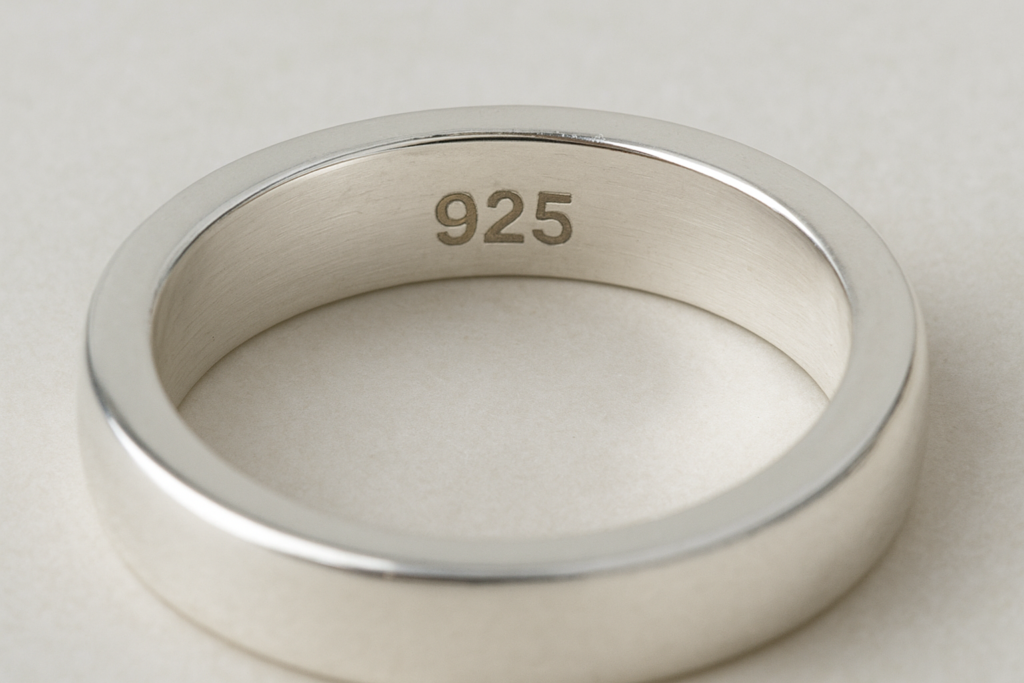
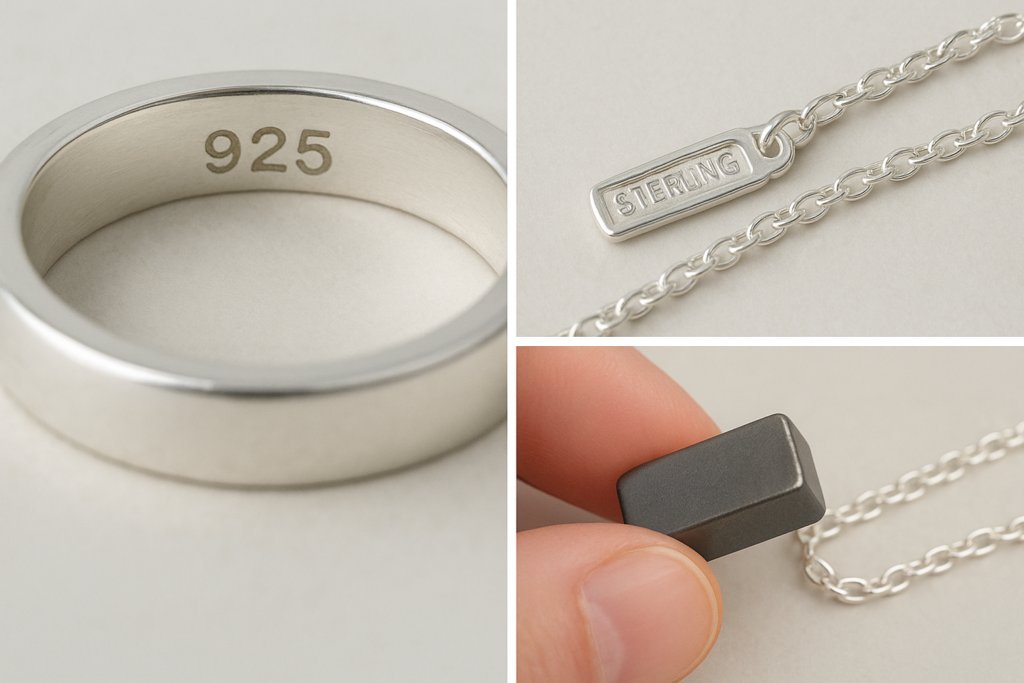
Most sterling silver jewelry pieces are stamped with “925,” “STER,” or “STERLING” to prove authenticity.
👉 Fun fact: The term “sterling” comes from the 12th century when King Henry II introduced durable silver coins known as “Easterling coins.”
Is Sterling Silver Real?
Yes, sterling silver is real silver. It’s not fake—just a mixture of pure silver with small amounts of other metals to increase strength.
Be careful not to confuse sterling silver with silver-plated jewelry, which is cheap base metal covered in a thin silver coating.
How to Tell if Sterling Silver is Real
Look for the 925 hallmark or the word STERLING.
Use a magnet test: real sterling silver is not magnetic.
Smell test: if it smells metallic, it’s not genuine.
Price check: if it seems too cheap, it’s probably not real sterling silver.
Visit a jeweler for a professional test.
What’s the Difference Between Silver and Sterling Silver?
Pure silver (999): Softer, more prone to scratches, rarely used in everyday jewelry.
Sterling silver (925): Stronger, more durable, perfect for rings, earrings, bracelets, and necklaces.
Silver plated: Only a coating of silver, not the same value or durability.
| Property | Fine Silver 999 | Sterling Silver 925 | Silver Plated |
|---|---|---|---|
| Purity | 99.9% pure silver | 92.5% silver + 7.5% copper/zinc | Thin layer of silver over base metal |
| Durability | Very soft, scratches easily | Strong and durable for daily wear | Wears off quickly, not long-lasting |
| Hallmark | 999 or FS | 925, STERLING, or STER | Usually none or “PLATED” |
| Value | High (almost pure silver) | High-quality & affordable | Low, little resale value |
| Best For | Collectors, coins, investment | Jewelry, rings, necklaces, earrings | Fashion jewelry, short-term wear |

How to Tell the Difference Between Sterling Silver and Pure Silver
Look at the hallmark: 999 or FS = pure silver; 925 or STER = sterling.
Sterling is stronger and less likely to bend.
Fine silver is softer and usually reserved for collectors or coins.
Which is Better for Jewelry–Sterling Silver or Silver?
Sterling silver is better for everyday jewelry. Pure silver (999) is beautiful but too soft to hold gemstones securely. That’s why most engagement rings, wedding bands, necklaces, and earrings are made from 925 sterling silver.
Does Sterling Silver Tarnish?
Yes, sterling silver can tarnish when exposed to sulfur in the air, humidity, or chemicals. Tarnish appears as a dark coating, but the good news is—it’s not permanent!
Does Sterling Silver Rust?
No. Rust affects iron, not silver. Sterling silver never rusts—it only tarnishes.
How Much is 925 Sterling Silver Worth?
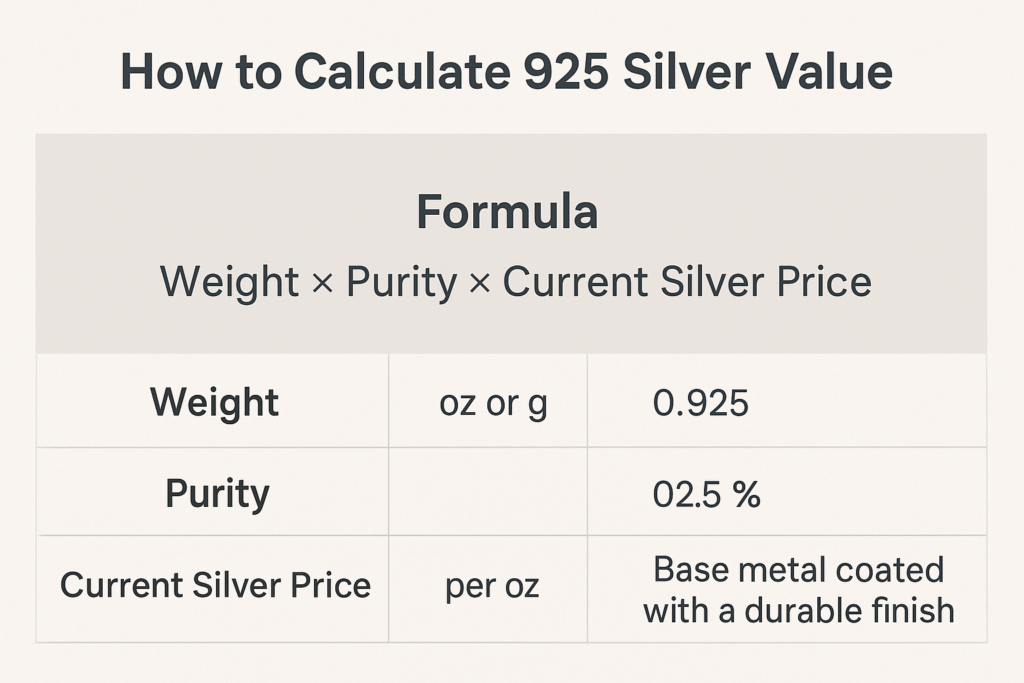
The value of sterling silver depends on its weight and the current silver market price.
Weigh your jewelry in grams or ounces.
Multiply by 0.925 (pure silver content).
Multiply by the current price of silver per ounce.
👉 Remember: the value of jewelry also includes craftsmanship, gemstones, and design, not just metal weight.