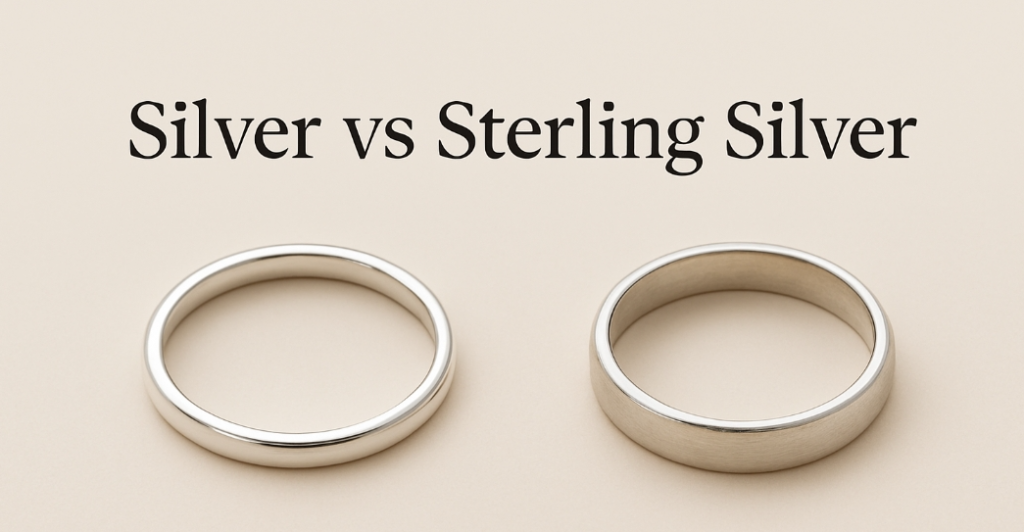
When shopping for jewelry or silver pieces, you often see two similar terms: silver and sterling silver. But they’re not the same. Knowing the difference helps you choose pieces that last longer and keep their shine. Let’s explore which one is better for your jewelry collection.
WHAT IS SILVER?
“Silver” usually means pure silver, or 99.9% fine silver. It’s very soft, shiny, and beautiful — but not strong enough for everyday jewelry
Pros and Cons
✅ Beautiful natural shine ✅ High purity ❌ Scratches and bends easily ❌ Not ideal for rings or chains
WHAT IS STERLING SILVER?
Composition and Strength
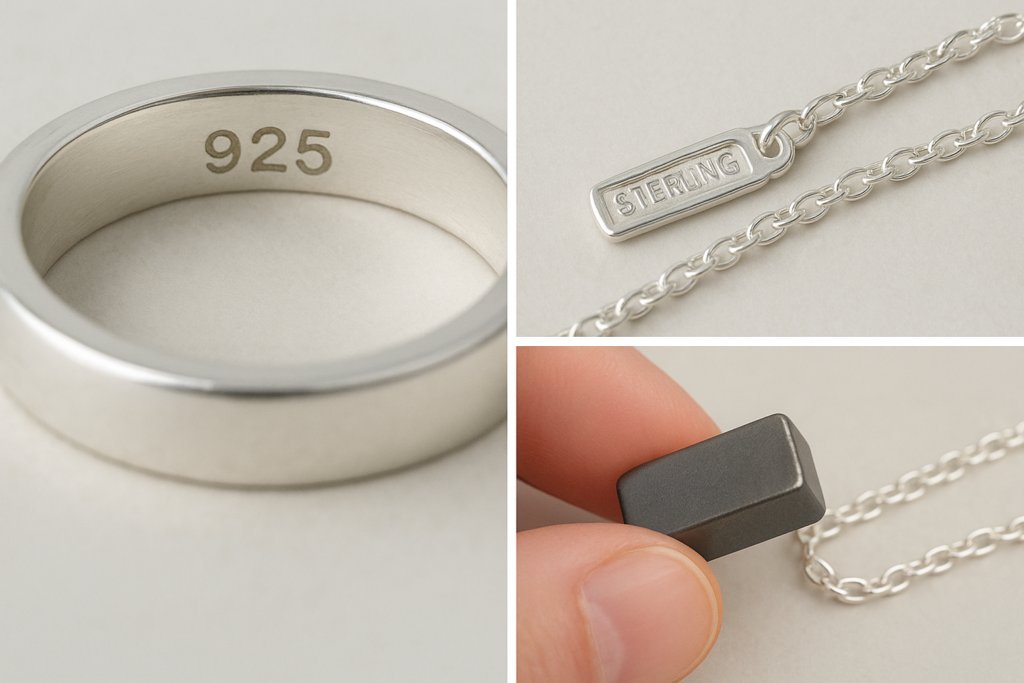
Sterling silver contains 92.5% pure silver and 7.5% copper or alloy metals. It’s marked “.925”, which guarantees authenticity. This mix gives it more durability, perfect for jewelry and daily use.
Benefits
✅ Stronger and longer-lasting ✅ Easy to polish and clean ✅ Retains real silver shine ✅ Affordable and practical
SIDE-BY-SIDE COMPARISON
Feature
Pure Silver (99.9%)
Sterling Silver (92.5%)
Purity
99.9% silver
92.5% silver + alloys
Durability
Very soft
Strong and durable
Common Use
Coins, décor
Jewelry, accessories
Maintenance
Scratches easily
Easier to clean
Price
Higher
Moderate
Best For
Collectors
Everyday wear
WHY STERLING SILVER IS BETTER FOR JEWELRY
Keeps its shine longer
More resistant to scratches and bending
Ideal for rings, necklaces, and bracelets
Great balance between value and durability
COMMON MYTHS
“Sterling silver is not real silver.”
❌ False! It’s real silver — just mixed for strength.
“Sterling silver doesn’t shine.”
❌ Wrong! It shines just like pure silver when polished.
“Sterling silver causes allergies.”
⚠️ Rarely. High-quality sterling silver usually avoids nickel or harmful metals.